English
English
Español
Português
русский
français
日本語
Deutsch
Tiếng Việt
Italiano
Nederlands
ไทย
Polski
한국어
Svenska
magyar
Malay
বাংলা
Dansk
Suomi
हिन्दी
Pilipino
Türk
Gaeilge
عربى
Indonesia
norsk
اردو
čeština
Ελληνικά
Українська
Javanese
فارسی
தமிழ்
తెలుగు
नेपाली
Burmese
български
ລາວ
Latine
Қазақ
Euskal
Azərbaycan
slovenský
Македонски
Lietuvos
Eesti Keel
Română
Slovenski
मराठी
Српски
Esperanto
Afrikaans
Català
עִברִית
Cymraeg
Galego
Latvietis
icelandic
יידיש
Беларус
Hrvatski
Kreyòl ayisyen
Shqiptar
Malti
lugha ya Kiswahili
አማርኛ
Bosanski
Frysk
ជនជាតិខ្មែរ
ქართული
ગુજરાતી
Hausa
Кыргыз тили
ಕನ್ನಡ
Corsa
Kurdî
മലയാളം
Maori
Монгол хэл
Hmong
IsiXhosa
Zulu
Punjabi
پښتو
Chichewa
Samoa
Sesotho
සිංහල
Gàidhlig
Cebuano
Somali
Точик
O'zbek
Hawaiian
سنڌي
Shinra
հայերեն
Igbo
Sundanese
Lëtzebuergesch
Malagasy
Yoruba
Javanese
Banbala
Pokjoper
Divih
Philippine
Gwadani
Elokano

The service life of electric heating strips directly affects the anti freezing effect of pipelines and the later maintenance costs. Most cables experience premature aging and failure, mainly due to selection deviations, non-standard construction, inadequate protection, and operational oversights. By controlling the key points of extending lifespan and standardizing the entire usage management, equipment aging can be effectively delayed and the system operation status can be stabilized.

Accurate selection of operating conditions is the fundamental prerequisite for the long-term use of electric heat tracing belts. The requirements for temperature resistance, corrosion resistance, and explosion protection levels of cables vary greatly in different environments. Ordinary civilian heat tracing belts used for high temperature, corrosion, and explosion protection conditions can quickly cause sheath aging and insulation breakdown. Low temperature pipelines should be selected with low-temperature resistant models, high-temperature process pipelines should be matched with high-temperature resistant constant power or MI armored heat tracing belts, and fluoroplastic anti-corrosion sheaths should be preferred for chemical and coastal areas. Proper matching of working conditions can prevent rapid material degradation from the source and effectively extend the service life.
Standardized and standardized construction is the core link to prevent cable damage in advance. The non-standard construction on site is the main human factor that shortens the service life of the heat tracing belt. During laying, cables must not be crossed, overlapped, squeezed, wrapped, or excessively bent to avoid local heat accumulation, overheating, and accelerated aging; It is strictly prohibited for sharp objects to scratch the outer sheath and prevent hidden insulation damage. Valves and elbows are reinforced and laid, and reasonable margins are reserved for pipeline expansion and contraction to prevent thermal expansion and contraction of pipelines, pulling and tearing cables, and reducing early failure problems caused by mechanical damage.
Proper sealing and insulation protection can significantly reduce environmental erosion losses. The junction box, terminal head, and intermediate joint are the weak points that are most susceptible to moisture aging. During construction, sealant must be filled and the sealing structure must be compacted to prevent rainwater, accumulated water in the pipe trench, and moisture from entering. The insulation layer has a thickness that meets the standard, is tightly wrapped, and has no damage, gaps, or accumulated water. It can reduce the impact of alternating cold and heat and atmospheric corrosion, prevent cables from being exposed to harsh environments with high humidity and temperature differences for a long time, and slow down the aging rate of materials.
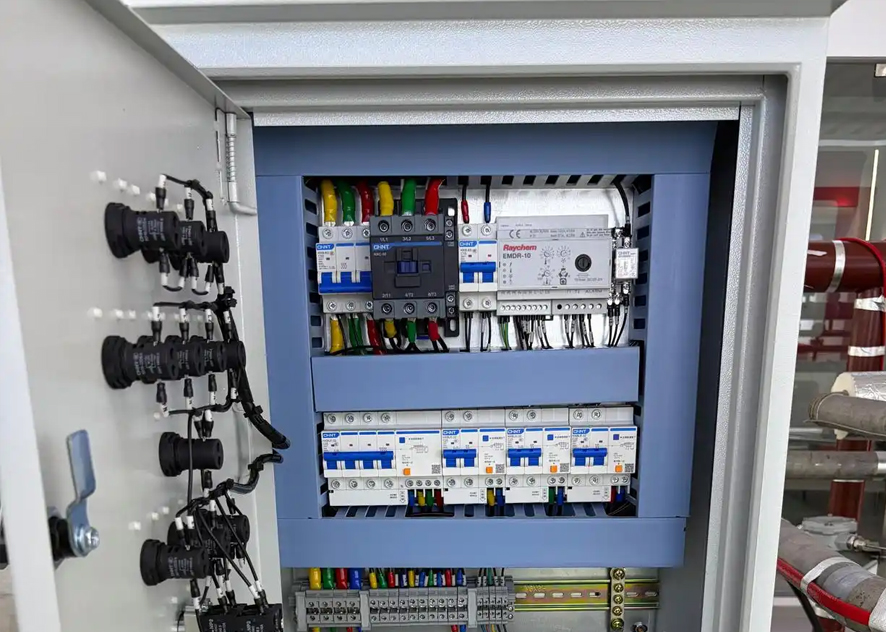
Reasonable temperature control and scientific operation to reduce high-frequency losses. Long term power on without temperature control and frequent over temperature start stop can accelerate the fatigue attenuation of PTC core materials, leading to a gradual decrease in power and premature scrapping of equipment. Equipped with a formal temperature control system, set a reasonable start stop temperature range to avoid 24/7 ineffective power on and local overheating. A stable and regular operating mode can effectively reduce cable thermal cycle losses, maintain stable heating performance, and significantly extend the overall service life.
Regular inspections and rectification of hidden dangers to prevent operation with defects. Long term operation of the heat tracing system may lead to hidden dangers such as insulation detachment, sheath cracking, joint moisture, and temperature control failure. If not dealt with in a timely manner, the scope of the fault will quickly expand, causing the entire cable to age and be scrapped. Daily operation and maintenance require regular testing of insulation resistance, inspection of appearance damage, fastening of loose parts, timely replacement of aging and ineffective accessories, prevention of faulty operation, and maintenance of the system in good working condition.
Avoid overloading and unauthorized use, and ensure stable operating conditions of equipment. It is strictly prohibited to extend cables, parallel expand capacity, or change circuit power without authorization. Overloading operation can cause line overload, abnormal heating, and accelerate insulation aging. Mixing ordinary non explosion proof products is strictly prohibited in high-risk environments, and illegal wiring and unprotected power on are strictly prohibited. Standardize electrical matching, equip with leakage protection and air circuit breakers, avoid damage to cable structures caused by instantaneous voltage surges, and extend the service life of equipment.
The long-term operation of electric heat tracing relies on precise selection, standardized construction, sealing protection, scientific temperature control, and regular inspections. Strictly implementing various standardized control measures, avoiding illegal operations and environmental erosion damage, can effectively reduce cable aging and loss, and ensure the long-term safe and stable operation of pipeline electric tracing systems.