English
English
Español
Português
русский
français
日本語
Deutsch
Tiếng Việt
Italiano
Nederlands
ไทย
Polski
한국어
Svenska
magyar
Malay
বাংলা
Dansk
Suomi
हिन्दी
Pilipino
Türk
Gaeilge
عربى
Indonesia
norsk
اردو
čeština
Ελληνικά
Українська
Javanese
فارسی
தமிழ்
తెలుగు
नेपाली
Burmese
български
ລາວ
Latine
Қазақ
Euskal
Azərbaycan
slovenský
Македонски
Lietuvos
Eesti Keel
Română
Slovenski
मराठी
Српски
Esperanto
Afrikaans
Català
עִברִית
Cymraeg
Galego
Latvietis
icelandic
יידיש
Беларус
Hrvatski
Kreyòl ayisyen
Shqiptar
Malti
lugha ya Kiswahili
አማርኛ
Bosanski
Frysk
ជនជាតិខ្មែរ
ქართული
ગુજરાતી
Hausa
Кыргыз тили
ಕನ್ನಡ
Corsa
Kurdî
മലയാളം
Maori
Монгол хэл
Hmong
IsiXhosa
Zulu
Punjabi
پښتو
Chichewa
Samoa
Sesotho
සිංහල
Gàidhlig
Cebuano
Somali
Точик
O'zbek
Hawaiian
سنڌي
Shinra
հայերեն
Igbo
Sundanese
Lëtzebuergesch
Malagasy
Yoruba
Javanese
Banbala
Pokjoper
Divih
Philippine
Gwadani
Elokano

Most conventional industrial heat‑tracing products focus on low‑voltage working conditions such as 220V‑380V. For remote heavy‑industrial sites far from low‑voltage distribution centers, adopting low‑voltage heat‑tracing systems will trigger substantial voltage drop over lengthy power supply cables, requiring expensive heavy‑gauge power cabling reconstruction. High‑voltage‑capable series‑connected heat‑tracing technology offers an alternative optimization path for such global engineering challenges.
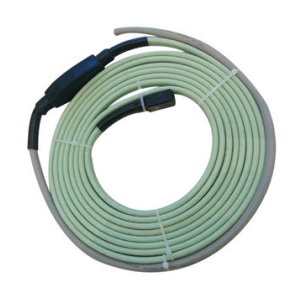
HGC‑1 and HGC‑3 series‑connected constant‑power heating cables are engineered to operate across an extensive rated‑voltage portfolio from 220V up to 6600V. By matching appropriate operating voltage according to loop total length and target watt‑per‑meter output, system designers can cut cross‑section requirements for front‑end power supply wiring and optimize overall heat‑tracing system capital expenditure for ultra‑long pipeline routes.
Relying on series‑loop Joule‑heat generation principle, every segment of the heating cable keeps consistent power output without end‑of‑line thermal decay, regardless of adopted voltage grade. The product maintains compatibility with explosion‑proof Zone I, Zone II and Division 2 hazardous‑area specifications. It covers typical application scenarios including heavy‑chemical material transport pipelines, metallurgical auxiliary process lines, remote chemical‑park inter‑plant piping and long‑distance viscous‑medium transfer lines that need stable temperature preservation to prevent medium coagulation.
Engineers must note that series‑connected constant‑power heating cables are manufactured to fixed project‑specific lengths and cannot be arbitrarily truncated on‑site. Combined with standardized cold‑end terminal assembly procedures, the multi‑voltage‑range HGC series offers flexible thermal‑management choices for global large‑scale industrial complex planning and upgrading.

Multi‑layer Reinforced Construction of HGC Series Heat‑tracing Cable Boosts Service Life for Corrosive Underground Industrial Pipeline Systems
Series‑connected vs Parallel Heat‑tracing Solutions: HGC‑1 / HGC‑3 Brings New Reference for Global Long‑haul Pipeline Thermal‑management Design