English
English
Español
Português
русский
français
日本語
Deutsch
Tiếng Việt
Italiano
Nederlands
ไทย
Polski
한국어
Svenska
magyar
Malay
বাংলা
Dansk
Suomi
हिन्दी
Pilipino
Türk
Gaeilge
عربى
Indonesia
norsk
اردو
čeština
Ελληνικά
Українська
Javanese
فارسی
தமிழ்
తెలుగు
नेपाली
Burmese
български
ລາວ
Latine
Қазақ
Euskal
Azərbaycan
slovenský
Македонски
Lietuvos
Eesti Keel
Română
Slovenski
मराठी
Српски
Esperanto
Afrikaans
Català
עִברִית
Cymraeg
Galego
Latvietis
icelandic
יידיש
Беларус
Hrvatski
Kreyòl ayisyen
Shqiptar
Malti
lugha ya Kiswahili
አማርኛ
Bosanski
Frysk
ជនជាតិខ្មែរ
ქართული
ગુજરાતી
Hausa
Кыргыз тили
ಕನ್ನಡ
Corsa
Kurdî
മലയാളം
Maori
Монгол хэл
Hmong
IsiXhosa
Zulu
Punjabi
پښتو
Chichewa
Samoa
Sesotho
සිංහල
Gàidhlig
Cebuano
Somali
Точик
O'zbek
Hawaiian
سنڌي
Shinra
հայերեն
Igbo
Sundanese
Lëtzebuergesch
Malagasy
Yoruba
Javanese
Banbala
Pokjoper
Divih
Philippine
Gwadani
Elokano

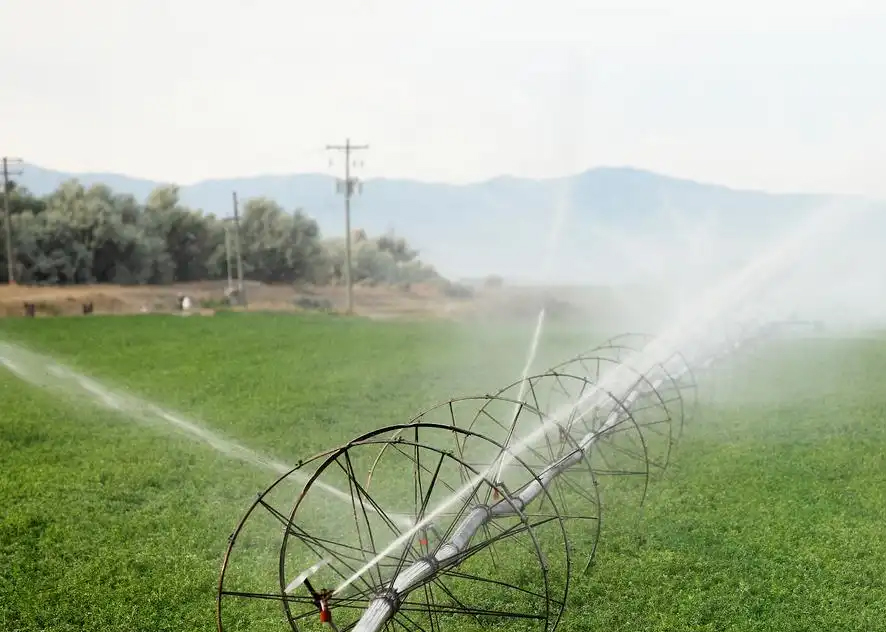
Low temperature weather can easily cause freezing and cracking of agricultural irrigation pipelines and sprinkler equipment, affecting normal water supply for agriculture. Electric heat tracing can effectively solve the winter anti freezing problem of irrigation systems and adapt to the insulation needs of various pipelines and water and fertilizer equipment in the field. Combined with the application of agricultural special working conditions standards, it can ensure the stable operation of irrigation systems in winter.

Accurate selection tailored to agricultural conditions, suitable for complex field environments. Agricultural irrigation is mostly carried out in outdoor scenes with large temperature differences between day and night, frequent sandstorms, high humidity, and no professional explosion-proof requirements. Low temperature self limiting electric heating belts are preferred to meet the needs. Conventional field PE pipes and PVC pipes are selected with low-power models ranging from 10W/m to 15W/m, which have low energy consumption, automatic temperature regulation, and do not require complex temperature control. They are suitable for long-term low-temperature standby and anti freezing. It is recommended to choose a 20W/m medium power weather resistant model for cold regions in the north, overhead long pipelines, and exposed air vents, with sufficient heating allowance reserved to resist extreme low temperature freezing damage.
Distinguish between buried and overhead pipelines, and carry out differentiated laying construction. Irrigation pipelines are divided into buried pipelines and overhead pipelines, each with its own requirements for laying methods. Buried irrigation pipes have good soil insulation and slow heat dissipation. The heat tracing strip can be laid flat on the outside of the pipe without the need for dense laying, saving construction costs. Overhead exposed pipelines are subject to strong winds and dissipate heat quickly, so they need to be laid closely to the low-temperature side of the pipeline bottom. Elbows, joints, valves, pressure gauges, and other freezing prone points should be surrounded and reserved to eliminate dead corners in anti freezing. Violent pulling or scratching of the protective sheath with sharp objects is strictly prohibited during construction to prevent moisture from seeping into the field and causing malfunctions.
Take measures to prevent water and weather, and adapt to the humid environment in the field. The agricultural environment is prone to moisture, mud, and dust, and pipelines are exposed to damp outdoor conditions for a long time. Cable sheaths are easily weathered and damaged by moisture. Priority should be given to selecting UV resistant and water-resistant protective sheaths with heat tracing belts, suitable for long-term exposure to sunlight and rain. The joints and terminal positions must be properly waterproofed and sealed to prevent leakage and short circuits caused by mud and water infiltration. The outer insulation layer of the pipeline is fully wrapped to prevent condensation and freezing due to temperature differences between day and night, delay cable aging, and improve equipment weather resistance.
Simplify control configuration and adapt to low-cost agricultural operation and maintenance. The agricultural irrigation system mainly relies on antifreeze and does not require high-precision constant temperature, which can simplify the supporting equipment. Conventional scenarios do not require the installation of complex temperature control cabinets, and stable anti freezing can be achieved through adaptive power adjustment of self limiting cables. Small air switches and leakage protection devices can be uniformly installed in centralized irrigation areas to prevent line leakage and ensure electrical safety. Eliminate uninterrupted power supply throughout the year, open during low temperature periods, and shut down in a timely manner when temperatures rise, effectively reducing electricity consumption in farmland.
Targeted operation and maintenance management to extend the service life of equipment. The seasonal usage characteristics of agricultural equipment are obvious. Before putting it into operation in winter, it is necessary to check whether the cable sheath is damaged, whether the joints are damp, and whether the lines are powered on normally. After the spring plowing is stopped, cut off the power in a timely manner, clean up pipeline debris, check the aging of cables, do a good job of sun and dust protection, and avoid weathering and damage during idle period. If the sheath cracks or insulation decays, it should be replaced in a timely manner to ensure normal operation in the next season.
The application of agricultural irrigation electric heat tracing focuses on low cost, stable anti freezing, and easy operation and maintenance. According to the differentiated selection and construction of overhead, underground, and north-south temperature difference conditions, doing a good job in waterproofing, weather resistance protection, and seasonal operation and maintenance can completely solve the problem of irrigation pipeline freezing and blockage, and ensure the continuous and stable operation of farmland irrigation systems in autumn, winter, and early spring.