English
English
Español
Português
русский
français
日本語
Deutsch
Tiếng Việt
Italiano
Nederlands
ไทย
Polski
한국어
Svenska
magyar
Malay
বাংলা
Dansk
Suomi
हिन्दी
Pilipino
Türk
Gaeilge
عربى
Indonesia
norsk
اردو
čeština
Ελληνικά
Українська
Javanese
فارسی
தமிழ்
తెలుగు
नेपाली
Burmese
български
ລາວ
Latine
Қазақ
Euskal
Azərbaycan
slovenský
Македонски
Lietuvos
Eesti Keel
Română
Slovenski
मराठी
Српски
Esperanto
Afrikaans
Català
עִברִית
Cymraeg
Galego
Latvietis
icelandic
יידיש
Беларус
Hrvatski
Kreyòl ayisyen
Shqiptar
Malti
lugha ya Kiswahili
አማርኛ
Bosanski
Frysk
ជនជាតិខ្មែរ
ქართული
ગુજરાતી
Hausa
Кыргыз тили
ಕನ್ನಡ
Corsa
Kurdî
മലയാളം
Maori
Монгол хэл
Hmong
IsiXhosa
Zulu
Punjabi
پښتو
Chichewa
Samoa
Sesotho
සිංහල
Gàidhlig
Cebuano
Somali
Точик
O'zbek
Hawaiian
سنڌي
Shinra
հայերեն
Igbo
Sundanese
Lëtzebuergesch
Malagasy
Yoruba
Javanese
Banbala
Pokjoper
Divih
Philippine
Gwadani
Elokano

During the use of electric heat tracing belts, there is often a problem of weak heating or even no heating at all, which can easily cause pipeline freezing and freezing failure. In most cases, it is not a product quality issue, but rather a result of improper power supply, installation, and maintenance. Identifying the root cause of the malfunction and addressing it accordingly can effectively solve various hidden issues in equipment operation.

Abnormal power supply is the most common reason for the lack of heating in the heat tracing zone. Low or unstable voltage on site, or frequent tripping of circuit breakers and circuit breakers, can all cause equipment to malfunction. Loose wiring terminals, virtual connections in the circuit, and other issues can result in a situation where the surface is energized normally but there is actually no effective current transmission, directly causing the heat tracing belt to not heat up.
When troubleshooting, it is necessary to first cut off the power to ensure safety protection, check whether the protection switch is closed normally, and investigate whether there is overload or leakage tripping. Retest whether the power supply voltage meets the rated standards of the equipment, tighten loose wiring terminals, replace damaged and aging circuits, and work under conditions with large voltage fluctuations. Stable power supply can be achieved by using voltage stabilizing equipment.
The non-standard construction and installation is the main factor of human error. Cable suspension, excessive bending, compression deformation, or failure to closely adhere to the pipe wall during installation can all cause heat conduction to be disrupted. It may appear that the equipment is not working, but in reality, it is caused by improper installation leading to abnormal heating. Long term poor installation can also cause local damage.
During construction, it is necessary to use pressure-sensitive adhesive tape to level and fix the cables, ensuring that they are fully adhered to the pipe wall and avoiding hanging, twisting, and knotting. At the same time, strict control of the laying length is required, and the self limiting heat tracing tape is laid excessively long, which is likely to cause power attenuation and no heating at the end. Long distance pipelines need to be constructed with reasonable segmented power supply.
Malfunction of temperature control equipment can also cause the heat tracing belt to fail to start properly. Misalignment, damage, or improper temperature control parameter settings of temperature control probes can cause temperature misjudgment. The equipment does not start in a low-temperature environment, causing the pipeline to freeze and block, seriously affecting the overall anti freezing effect.
During the investigation, it is necessary to adjust the position of the probe, install it closely to the low-temperature side of the pipeline, avoid the heat tracing belt body, and ensure accurate temperature measurement. Verify and restore standard start stop parameters, promptly replace damaged probes and thermostats, and ensure the sensitivity and stability of the temperature control system.
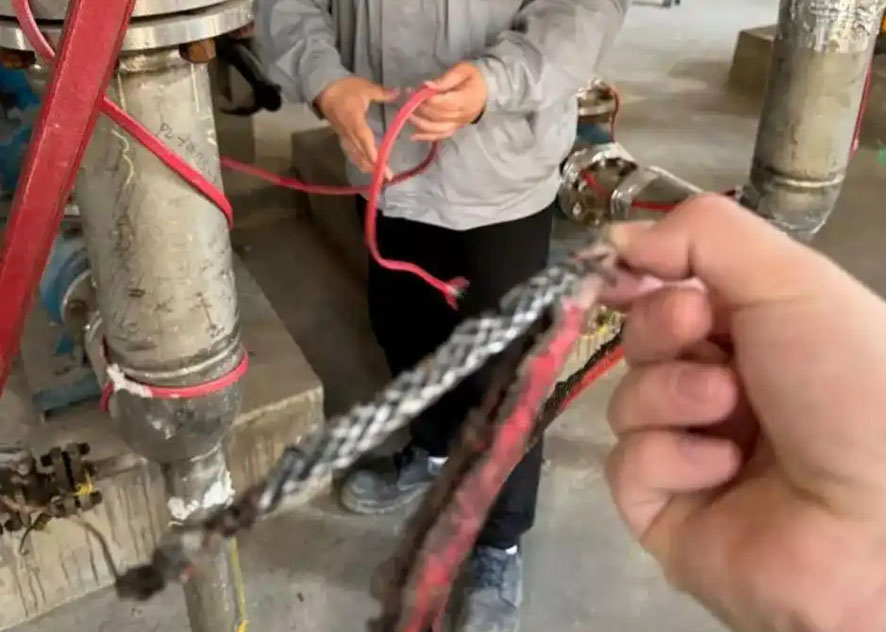
Long term use of equipment may result in material aging and performance degradation. Under conditions of outdoor exposure, corrosion, and humidity, cable sheaths are prone to cracking and aging, causing damage to internal core wires and PTC heating layers. This can result in insufficient heating and localized failure to generate heat. Overloading operation can also accelerate equipment aging and failure.
Daily operation and maintenance should regularly inspect the appearance of cables, and promptly replace new cables if problems such as hardening, damage, or low insulation values are found. Special models with anti-corrosion and weather resistance are preferred for harsh working conditions to reduce environmental losses and extend equipment service life.
Damage, water ingress, detachment, and cracking of the insulation layer can also cause a decrease in heating efficiency. The rapid loss of heat in the pipeline, even if the heat tracing belt is working normally, may result in insufficient heating, which can easily be mistaken as equipment failure. Timely repair or replace the insulation layer that has been damaged by moisture, and ensure proper sealing protection to restore normal anti freezing effect.
In summary, if the electric heating belt does not generate heat, it can be prioritized to investigate from the dimensions of power supply, installation, temperature control, and equipment aging. Most malfunctions are caused by minor issues and do not require blind replacement of equipment. Standardized investigation and scientific processing can quickly restore the operation of the heat tracing system and ensure the winter anti freezing stability of the pipeline.