English
English
Español
Português
русский
français
日本語
Deutsch
Tiếng Việt
Italiano
Nederlands
ไทย
Polski
한국어
Svenska
magyar
Malay
বাংলা
Dansk
Suomi
हिन्दी
Pilipino
Türk
Gaeilge
عربى
Indonesia
norsk
اردو
čeština
Ελληνικά
Українська
Javanese
فارسی
தமிழ்
తెలుగు
नेपाली
Burmese
български
ລາວ
Latine
Қазақ
Euskal
Azərbaycan
slovenský
Македонски
Lietuvos
Eesti Keel
Română
Slovenski
मराठी
Српски
Esperanto
Afrikaans
Català
עִברִית
Cymraeg
Galego
Latvietis
icelandic
יידיש
Беларус
Hrvatski
Kreyòl ayisyen
Shqiptar
Malti
lugha ya Kiswahili
አማርኛ
Bosanski
Frysk
ជនជាតិខ្មែរ
ქართული
ગુજરાતી
Hausa
Кыргыз тили
ಕನ್ನಡ
Corsa
Kurdî
മലയാളം
Maori
Монгол хэл
Hmong
IsiXhosa
Zulu
Punjabi
پښتو
Chichewa
Samoa
Sesotho
සිංහල
Gàidhlig
Cebuano
Somali
Точик
O'zbek
Hawaiian
سنڌي
Shinra
հայերեն
Igbo
Sundanese
Lëtzebuergesch
Malagasy
Yoruba
Javanese
Banbala
Pokjoper
Divih
Philippine
Gwadani
Elokano

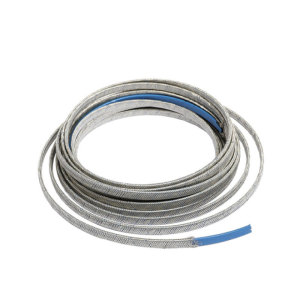
Global industrial thermal management markets keep shifting toward smart and low‑energy heat‑tracing solutions, replacing many traditional constant‑output heating layouts. Self‑regulating heat‑tracing tapes represented by DBR‑15‑220, DBR‑25‑220, GBR‑50‑220 and ZBR‑40‑220 leverage positive‑temperature‑coefficient polymer material, which raises internal resistance as surrounding temperature climbs and lowers heat output accordingly. Such intrinsic property removes the risk of hot‑spot burnout even when cables overlap during installation.
These self‑regulating series cover low‑temperature and medium‑temperature working grades. Medium‑temperature self‑limiting heating tapes handle process pipeline heat preservation inside chemical plants and refineries, while low‑temperature variants serve fire‑protection pipelines, water supply networks and outdoor facility frost prevention. Different voltage specifications adapt to regional power standards across international construction sites. Unlike fixed‑wattage cables, self‑regulating products permit field cutting to required length, bringing greater flexibility for on‑site layout changes.
For heavy‑duty outdoor infrastructure projects, low‑temperature heating tapes for driveway and roadway snow‑melting extend product application boundaries beyond pure factory process scenarios. As global industrial operators tighten energy consumption indicators, self‑regulating heat‑tracing systems become preferred options for new‑build and revamped industrial facilities, balancing operational safety, easy installation and long‑term power‑saving performance.