English
English
Español
Português
русский
français
日本語
Deutsch
Tiếng Việt
Italiano
Nederlands
ไทย
Polski
한국어
Svenska
magyar
Malay
বাংলা
Dansk
Suomi
हिन्दी
Pilipino
Türk
Gaeilge
عربى
Indonesia
norsk
اردو
čeština
Ελληνικά
Українська
Javanese
فارسی
தமிழ்
తెలుగు
नेपाली
Burmese
български
ລາວ
Latine
Қазақ
Euskal
Azərbaycan
slovenský
Македонски
Lietuvos
Eesti Keel
Română
Slovenski
मराठी
Српски
Esperanto
Afrikaans
Català
עִברִית
Cymraeg
Galego
Latvietis
icelandic
יידיש
Беларус
Hrvatski
Kreyòl ayisyen
Shqiptar
Malti
lugha ya Kiswahili
አማርኛ
Bosanski
Frysk
ជនជាតិខ្មែរ
ქართული
ગુજરાતી
Hausa
Кыргыз тили
ಕನ್ನಡ
Corsa
Kurdî
മലയാളം
Maori
Монгол хэл
Hmong
IsiXhosa
Zulu
Punjabi
پښتو
Chichewa
Samoa
Sesotho
සිංහල
Gàidhlig
Cebuano
Somali
Точик
O'zbek
Hawaiian
سنڌي
Shinra
հայերեն
Igbo
Sundanese
Lëtzebuergesch
Malagasy
Yoruba
Javanese
Banbala
Pokjoper
Divih
Philippine
Gwadani
Elokano

Global petrochemical operators keep upgrading electric heat‑tracing infrastructure to replace traditional steam tracing, raising higher requirements for intrinsic safety, corrosion resistance and full‑system matching in explosive and corrosive working zones. Industrial thermal‑management manufacturers launch a comprehensive product matrix covering multiple core heating‑cable technologies, supporting diverse operating‑temperature ranges and harsh‑environment working scenarios.
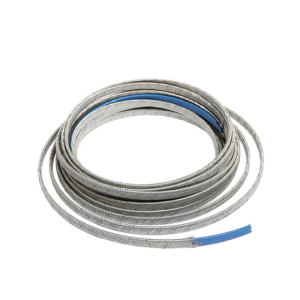
Self‑regulating heating cables including DBR‑15‑220, DBR‑25‑220, GBR‑50‑220 and ZBR‑40‑220 feature polymer conductive cores which automatically adjust heat output responding to ambient‑temperature changes, effectively preventing overheating risks for conventional process‑pipeline anti‑freezing and thermal‑preservation work in refinery sites. Parallel‑type, series‑type and silicone‑sheathed constant‑wattage heating cables offer stable fixed‑power output for long‑distance pipeline systems and compressor equipment heating requirements. MI mineral‑insulated heating cables adopt compact magnesium‑oxide mineral insulation structure with metal outer sheath, standing up to ultra‑high‑temperature continuous service, mechanical impact and chemical erosion for critical high‑temperature process loops.
The 60W/M anti‑corrosion explosion‑proof heating cable with reinforced fluoropolymer sheath is specially optimized for high‑corrosion hazardous chemical‑park zones, enhancing reliability under aggressive medium exposure. A complete supporting component ecosystem complements the heating‑cable lineup, ranging from FDH‑40‑E explosion‑proof power junction boxes, intermediate junction boxes, T‑type junction boxes, explosion‑proof end termination kits, explosion‑proof temperature controllers and distribution control cabinets, to installation consumables such as fiberglass tapes, aluminum‑foil tapes, pressure‑sensitive tapes and stainless‑steel fixing clips. PT100 temperature sensors realize closed‑loop temperature‑signal collection for whole‑set heat‑tracing control systems.
Pre‑fabricated heat‑traced composite pipelines form another key product segment. Corrosion‑resistant heat‑tracing sampling composite tubes integrate heating elements, anti‑corrosion sampling channels and multi‑layer thermal‑insulation structures, widely deployed for flue‑gas acquisition and CEMS environmental‑monitoring sampling systems. MI‑insulated composite pipelines and HGW parallel constant‑power composite tubes provide pre‑assembled, field‑ready thermal‑management modules to shorten on‑site construction cycles for international EPC contractors.
Industry practitioners note that full‑chain matching between heating cables and certified explosion‑proof accessories is critical for hazardous‑area projects. Mismatched system components may bring potential ignition hazards in petrochemical explosive atmospheres. Complete one‑stop heat‑tracing product suites simplify component‑selection workflows for global engineering clients while guaranteeing overall‑system compliance with international industrial safety standards.