English
English
Español
Português
русский
français
日本語
Deutsch
Tiếng Việt
Italiano
Nederlands
ไทย
Polski
한국어
Svenska
magyar
Malay
বাংলা
Dansk
Suomi
हिन्दी
Pilipino
Türk
Gaeilge
عربى
Indonesia
norsk
اردو
čeština
Ελληνικά
Українська
Javanese
فارسی
தமிழ்
తెలుగు
नेपाली
Burmese
български
ລາວ
Latine
Қазақ
Euskal
Azərbaycan
slovenský
Македонски
Lietuvos
Eesti Keel
Română
Slovenski
मराठी
Српски
Esperanto
Afrikaans
Català
עִברִית
Cymraeg
Galego
Latvietis
icelandic
יידיש
Беларус
Hrvatski
Kreyòl ayisyen
Shqiptar
Malti
lugha ya Kiswahili
አማርኛ
Bosanski
Frysk
ជនជាតិខ្មែរ
ქართული
ગુજરાતી
Hausa
Кыргыз тили
ಕನ್ನಡ
Corsa
Kurdî
മലയാളം
Maori
Монгол хэл
Hmong
IsiXhosa
Zulu
Punjabi
پښتو
Chichewa
Samoa
Sesotho
සිංහල
Gàidhlig
Cebuano
Somali
Точик
O'zbek
Hawaiian
سنڌي
Shinra
հայերեն
Igbo
Sundanese
Lëtzebuergesch
Malagasy
Yoruba
Javanese
Banbala
Pokjoper
Divih
Philippine
Gwadani
Elokano

Electric heat‑tracing has become mainstream thermal‑maintenance technology for global petrochemical and oil‑gas facilities, replacing steam tracing in more new‑build and revamping projects. Three major technical routes, namely self‑regulating heating cables, constant‑wattage heating cables and MI mineral‑insulated heating cables, occupy dominant market shares yet fit distinct industrial working‑condition requirements.
Self‑regulating heat‑tracing products represented by DBR, GBR and ZBR series rely on conductive‑polymer matrix to achieve automatic power modulation: heat output rises under low‑temperature conditions and drops when ambient temperature climbs, delivering intrinsic anti‑overheating capability. Such features make them well‑suited for general‑purpose pipeline freeze‑protection in refineries, fire‑protection pipelines anti‑freezing and road‑surface snow‑melting scenarios. Operators can cut self‑regulating cables to needed lengths on‑site, bringing convenience for diversified layout designs.
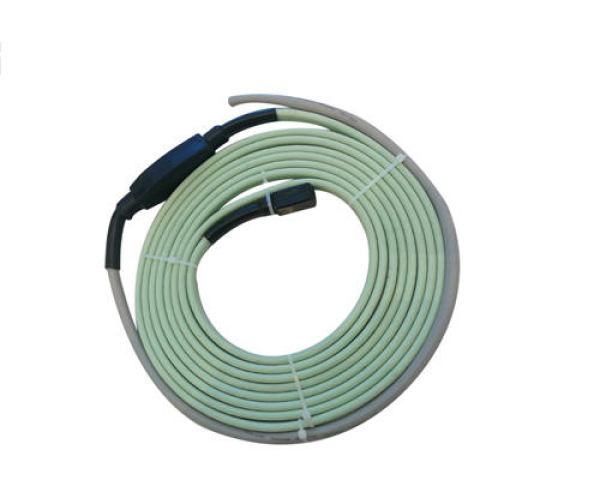
Constant‑wattage heating cables, covering parallel‑structure, series‑structure and silicone‑rubber‑sheath variants, supply stable rated heat output during operation. Parallel constant‑power cables support multi‑segment power feeding and adapt to long‑run pipeline layouts. Series constant‑power products apply to special fixed‑length equipment heating tasks, while silicone‑band constant‑power cables fit compressor surface heating under medium‑temperature environments. Since constant‑wattage cables cannot automatically reduce power output, they must cooperate with external temperature‑control units and explosion‑proof junction‑box assemblies to avoid thermal runaway risks in hazardous zones.
MI mineral‑insulated heating cables represent high‑end heavy‑duty heat‑tracing solutions. Metal heating conductors are embedded inside compact magnesium‑oxide mineral insulation and enclosed by metal sheaths. Outstanding mechanical‑strength, high‑temperature‑resistance and anti‑corrosion performance enable MI cables for ultra‑high‑temperature process‑pipe tracing and sites suffering severe mechanical abrasion or chemical attack. MI‑based pre‑fabricated composite‑tube products further expand its application for integrated instrument‑monitoring pipelines in chemical complexes.
Supporting hardware directly influences long‑term system performance. Explosion‑proof power boxes, intermediate connection boxes, termination kits, explosion‑proof thermostats and PT100 RTD sensors form indispensable control‑and‑connection chains for heat‑tracing installations. Auxiliary installation materials including fiberglass insulating tapes, aluminum‑foil heat‑conducting tapes and stainless‑steel fasteners improve thermal‑transfer efficiency and installation stability on‑site.
Global EPC engineering teams are tending to conduct condition‑based type‑selection: adopting self‑regulating cables for conventional freeze‑protection tasks, deploying constant‑wattage systems for long‑distance stable‑power‑demand loops, and specifying MI mineral‑insulated cables for extreme‑temperature, high‑mechanical‑load petrochemical working‑conditions, together with fully‑matched certified explosion‑proof accessories to satisfy international hazardous‑area compliance norms.